
Shoulder Surgery Lincoln, NE
Benjamin M. Woodhead, DO | Lincoln, NE Orthopedic Surgeon
Shoulder Surgery in Lincoln Nebraska
Shoulder pain can interfere with nearly every part of daily life, from reaching overhead and lifting objects to sleeping comfortably at night. Patients in Lincoln, Nebraska often seek answers when pain limits motion, strength, or confidence in their shoulder. Discover how the shoulder works, and the treatment pathways that may be considered based on each individual’s needs.
Dr. Benjamin M. Woodhead is a fellowship-trained orthopaedic surgeon with advanced expertise in shoulder and upper extremity care. Dr. Woodhead emphasizes shared decision-making, helping patients understand their diagnosis and options so they can make informed choices about care.


Anatomy of the Shoulder
The shoulder is the most mobile joint in the body, allowing the arm to move in nearly every direction. This mobility is made possible by a complex interaction between bones, muscles, tendons, ligaments, and cartilage. The joint is formed by the humeral head at the top of the arm bone and the glenoid of the shoulder blade. The clavicle connects the shoulder to the chest and contributes to overall stability.
A group of four muscles and their tendons, known as the rotator cuff, surround the joint and keep the ball centered in the socket during motion. The labrum is a rim of cartilage that deepens the socket and improves stability. The biceps tendon passes through the shoulder and plays a role in strength and balance. Fluid-filled bursae reduce friction between moving structures.
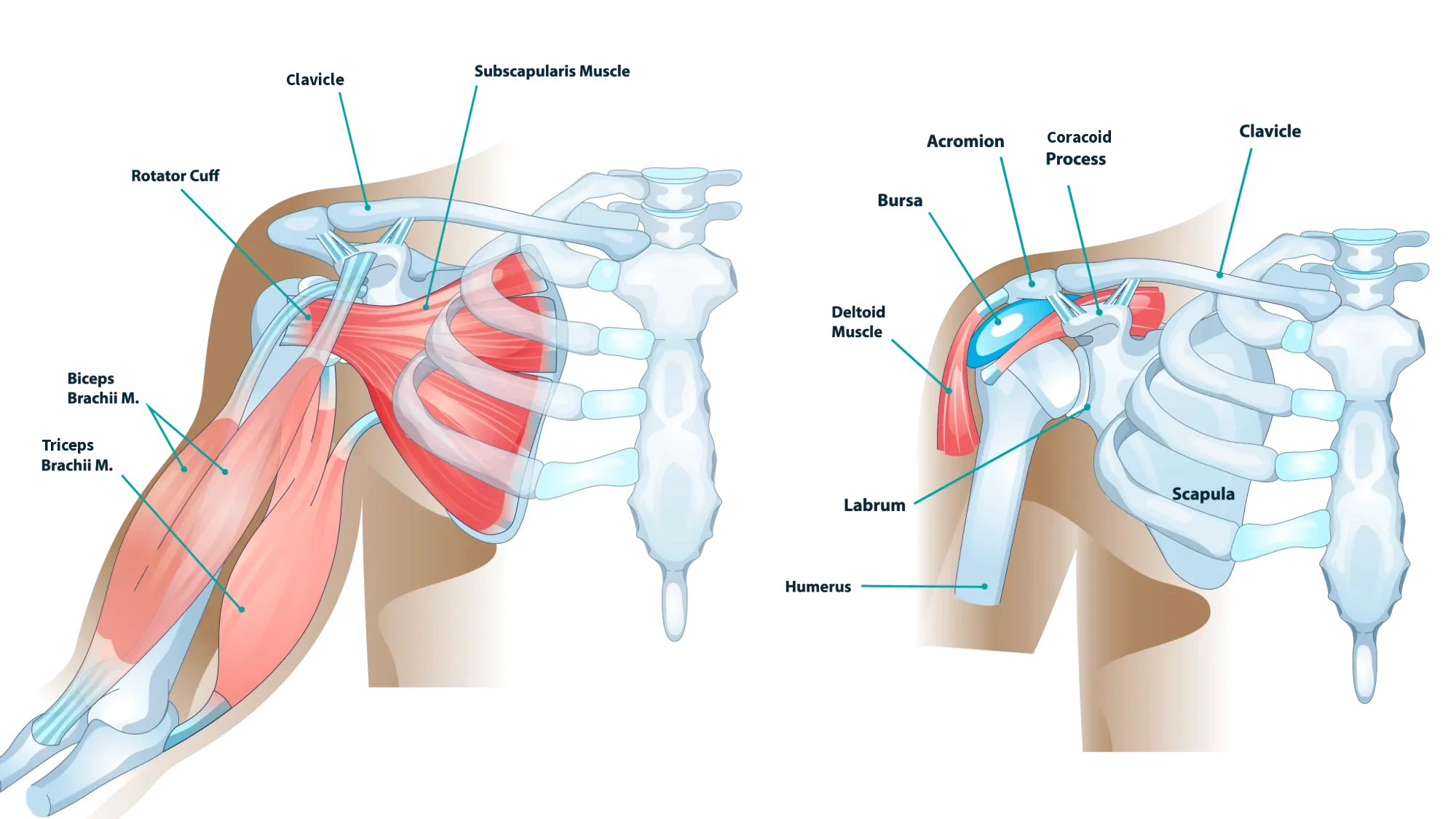
Because the shoulder relies on soft tissues rather than deep bony constraints, it achieves exceptional range of motion but is also vulnerable to injury and degeneration. Problems affecting any of these structures can lead to pain, weakness, stiffness, or instability.
Common Shoulder Conditions
Rotator Cuff Tears
Rotator cuff tears develop when one or more of the tendons that stabilize the shoulder are damaged. Tears may occur suddenly after a fall or lifting injury, or gradually over time due to wear and repetitive use. Symptoms often include pain when lifting the arm, weakness with overhead activity, difficulty sleeping on the affected side, and a feeling that the shoulder lacks strength.
Initial treatment focuses on reducing inflammation and restoring function. Activity modification, physical therapy, and anti-inflammatory medications are commonly used. Injections may be considered to manage pain and support participation in rehabilitation. Surgical repair may be discussed when symptoms persist and functional limitations remain significant.
Recovery depends on the chosen approach. Nonoperative care may improve comfort and motion over several weeks to months. After surgical repair, rehabilitation progresses through phases of protected motion, strengthening, and return to activity over several months.
Shoulder Impingement
Shoulder impingement develops when the rotator cuff tendons become compressed between the bones during shoulder movements. Symptoms include pain when reaching overhead or behind the back, difficulty sleeping on the affected shoulder due to night pain, progressive weakness with overhead activities, and pain that radiates down the outer arm. The discomfort typically worsens with repetitive overhead motions and may improve with rest.
Treatment starts with rest and avoiding aggravating activities to reduce inflammation. Physical therapy emphasizes exercises to improve shoulder blade position and create more space for the rotator cuff tendons. Anti-inflammatory medications help manage pain and swelling. Corticosteroid injections into the subacromial space may relieve pain in the short term to support participation in therapy. Arthroscopic surgery to remove inflamed tissue and create additional space may be considered when symptoms persist despite several months of appropriate conservative treatment.
Recovery from conservative management typically requires two to three months of consistent therapy. Arthroscopic decompression may require three months or longer before return to overhead activities and sports.
Labral Tears
The labrum is a ring of cartilage that deepens the shoulder socket and contributes to stability. Labral tears may occur after a traumatic injury such as a fall or dislocation, or from repetitive overhead use in athletes. Patients may notice deep shoulder pain, clicking or catching with movement, a sense of instability, or discomfort during throwing or lifting.
Treatment often begins with activity modification and physical therapy aimed at improving strength and mechanics around the shoulder. Medications and injections may be used to control pain. Arthroscopic repair may be discussed when symptoms persist or when instability affects daily function or athletic activity.
Recovery varies based on severity and treatment. Nonoperative care may improve symptoms over several weeks. After surgical repair, rehabilitation typically progresses over several months as motion, strength, and confidence return.
Shoulder Instability and Dislocations
Instability occurs when the shoulder moves out of its normal position, ranging from subtle slipping to complete dislocation. This may follow a traumatic injury or develop gradually in individuals with repetitive stress. Symptoms include apprehension with certain movements, pain after activity, and a feeling that the shoulder may give way.
Treatment focuses on restoring stability. Physical therapy strengthens the muscles that control the joint and improves movement patterns. Injections may help manage associated inflammation. Surgical stabilization may be considered when recurrent episodes or structural damage limit function.
Recovery timelines differ by approach. Some patients improve with rehabilitation over several months. After surgical stabilization, a structured program is initiated to help restore motion and strength.
Frozen Shoulder
Frozen shoulder is characterized by progressive stiffness and pain caused by thickening of the joint capsule. It often begins with aching discomfort and gradually leads to restricted motion in all directions. Daily tasks such as dressing or reaching overhead may become difficult.
Management centers on restoring mobility and reducing pain. Physical therapy, medications, and targeted injections are commonly used. In some cases, procedural options may be discussed when progress is limited.
The condition typically evolves through phases and often improves over time. Recovery may take many months, with gradual return of motion and comfort.
Biceps Tendon Injuries
The biceps tendon contributes to shoulder stability and strength. Injury may result from overuse, degeneration, or trauma and often causes pain in the front of the shoulder. Patients may notice weakness, tenderness, or a popping sensation with movement.
Treatment includes activity modification, therapy, and medications to reduce irritation. Injections may be used to control symptoms. Surgical options may be considered when pain persists or when the tendon is significantly damaged.
Recovery depends on severity and treatment. Conservative care may improve symptoms over weeks. After surgery, rehabilitation focuses on restoring strength and motion over several months.
Shoulder Arthritis
Shoulder arthritis develops as cartilage wears within the joint, leading to bone-on-bone contact. Symptoms include deep aching pain, stiffness, grinding sensations, and reduced range of motion. Activities such as reaching, lifting, and sleeping may become increasingly difficult.
Management may involve activity modification, medications, physical therapy, and injections to control pain and preserve function. Surgical options are discussed when symptoms persist despite appropriate conservative care.
Recovery varies widely. Nonoperative strategies may provide symptom relief over time. After surgical treatment, rehabilitation progresses through stages of healing and strengthening over several months.
Surgical Treatment Options
Total Shoulder Replacement
Total shoulder replacement is used to treat severe joint damage caused by arthritis, certain fractures, or other degenerative conditions. The procedure replaces the worn ball and socket surfaces with artificial components to restore smoother movement and reduce painful bone-on-bone contact. A metal ball replaces the damaged humeral head, and the socket is resurfaced with a durable plastic component designed to mimic natural joint motion.
Recovery occurs in stages, beginning with a period of protection in a sling and gentle, guided motion through physical therapy. Range of motion and strength are gradually restored over time. Many patients return to most daily activities within several months, with continued improvement as healing and conditioning progress.
Reverse Shoulder Replacement
Reverse shoulder replacement is designed for patients whose rotator cuff is no longer functional, such as those with rotator cuff tear arthropathy, massive irreparable tears, failed prior replacements, or complex fractures. In this procedure, the normal positions of the ball and socket are switched so the deltoid muscle can power arm movement in place of the damaged rotator cuff.
Recovery follows a similar course to total shoulder replacement. The arm is protected in a sling during early healing, and physical therapy focuses on restoring motion and adapting to the new joint mechanics. Functional gains may continue over time as strength, coordination, and confidence improve.
Summary
Shoulder pain can arise from many different conditions, each affecting movement and quality of life in unique ways. Understanding shoulder anatomy, common diagnoses, and available treatments is an important first step toward relief.
Dr. Benjamin M. Woodhead provides shoulder pain treatment in Lincoln, NE with a focus on education and shared decision-making. If shoulder symptoms are limiting your daily activities, schedule an appointment today and explore appropriate options for care.