Medically reviewed by Benjamin M. Woodhead, DO | Reviewed July 2026
Most people picture rotator cuff tears as something that happens later in life, and a lot of the time, that’s accurate. But I still see a steady stream of patients in their twenties, thirties, and forties in my Lincoln, Nebraska practice. A rotator cuff tear in a younger patient tends to look and behave differently than the same injury in an older adult. In this post, I’ll cover what typically causes these tears in a younger shoulder, and how my approach shifts when the patient in front of me still has decades of activity ahead.
Key Takeaways
- A rotator cuff tear in younger patients is usually caused by a specific traumatic event or repetitive overhead sports stress, rather than gradual wear.
- Younger tendon tissue tends to be healthier, which generally supports a stronger surgical repair and a better healing environment.
- Because of higher activity demands and a longer functional lifespan, I lean toward a more proactive approach to treatment in this age group.
- Not every young patient with a cuff tear needs surgery, but the conversation about surgical timing looks different than it does for an older patient.
Why Age Changes the Picture
The rotator cuff is a group of four muscles and tendons that stabilize the ball of the shoulder within its socket. In an older patient, a tear often develops slowly. The tendon weakens with age, loses some of its blood supply, and eventually fails under normal use. A rotator cuff tear in younger patients usually follows a different path.
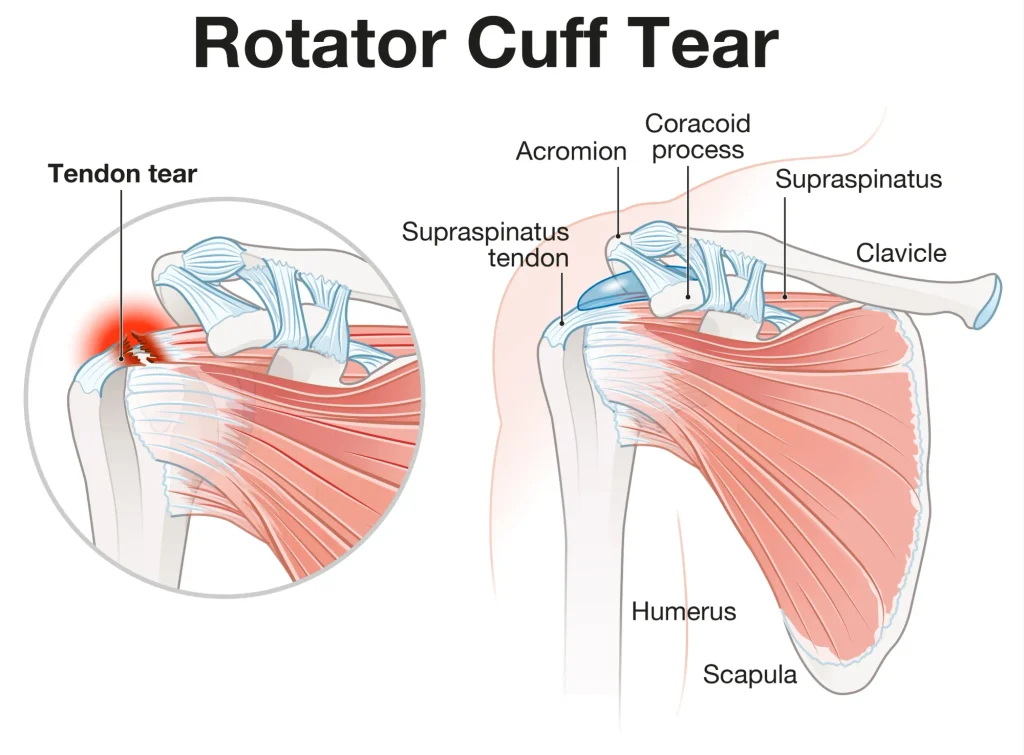
Traumatic tears account for a large share of the cuff tears I see in younger adults. A fall onto an outstretched arm, a heavy or awkward lift, a direct blow during a contact sport, or a shoulder dislocation can all tear a tendon. Patients usually remember the exact moment it happened, followed by sharp pain and immediate weakness.
Overhead athletic stress is the other major driver. Throwing athletes, swimmers, volleyball players, and weightlifters place repetitive, high-demand loads on the rotator cuff. Over months or years, that repetition can strain or partially tear the tendon even without a single dramatic injury.
This pattern overlaps closely with what I see across many shoulder sports injuries. A handful of certain sports show up again and again in this part of my practice: baseball and softball pitching, competitive swimming, volleyball, and weightlifting. All of them load the rotator cuff heavily and repeatedly. Contact sports like football and wrestling add a different risk, since a single awkward tackle or fall can tear a tendon outright. I ask every younger patient with shoulder symptoms about their sport and training volume, because that history often tells me as much as the imaging does.
Biologically, younger tendon tissue is usually in better condition to begin with. It hasn’t accumulated the same degree of degeneration that comes with age. The surrounding muscle typically hasn’t started to atrophy or scar, either, the way it can after a long-standing tear in an older patient. That healthier starting point matters quite a bit when we get to treatment.
What I See in My Patients
Younger patients tend to describe their symptoms with more precision than older patients do, probably because the injury usually traces back to a clear event. They’ll tell me the exact play, lift, or fall that started it. What strikes me most, though, is how much these patients try to push through the injury before coming in. Athletes especially will modify their mechanics, favor the shoulder, or simply grit through practice for weeks before admitting something is actually torn.
I understand the instinct. Nobody wants to hear they might need surgery, especially when there’s a season, a job, or an active lifestyle on the line. But I’ve also seen what happens when a significant tear goes untreated for too long in a younger, active person. The tear can enlarge with continued use. The muscle attached to that tendon can begin to weaken and change in ways that are much harder to reverse. I’d rather have that conversation early, while every option is still realistically on the table.
How I Evaluate a Younger Patient’s Shoulder
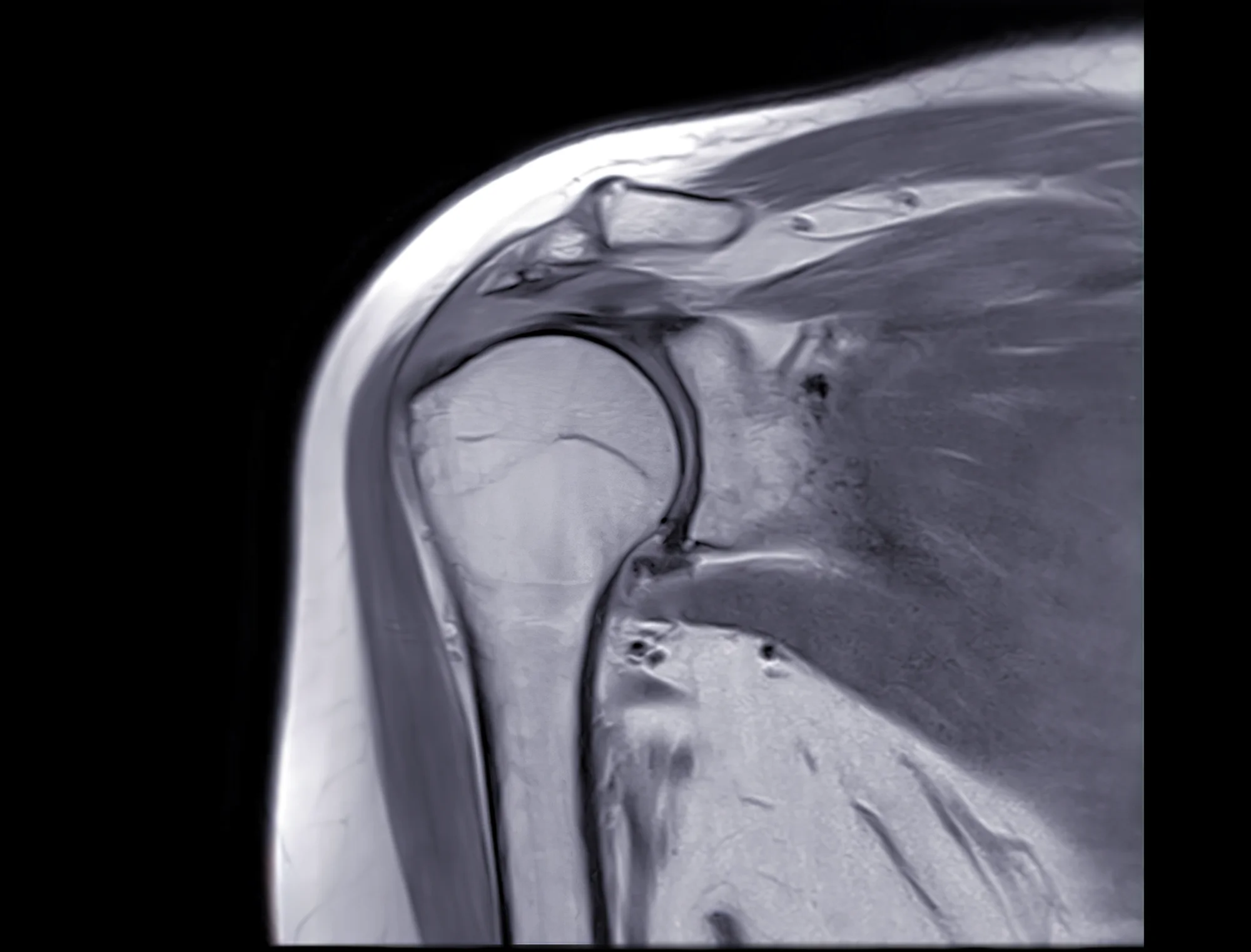
The evaluation itself follows a familiar path. A detailed history focused on how the injury happened comes first, followed by a physical exam testing strength and specific rotator cuff maneuvers, then imaging to confirm what’s going on structurally. X-rays help rule out fractures or bone involvement, and an MRI gives a clear picture of tear size, location, and the condition of the muscle itself.
What differs in a younger patient is how I weigh the findings. A moderate or large tear in someone in their thirties, who wants to keep training or playing sports for another twenty or thirty years, is a very different clinical conversation. It’s not the same tear as one in a patient whose goals are more modest. Age alone doesn’t decide the treatment, but it absolutely shapes the discussion.
My Approach to Treatment
For smaller partial tears, or mild symptoms in a patient who isn’t placing heavy demands on the shoulder, I’ll often start with a structured course of physical therapy. Strength work, mechanics, and activity modification are the focus. Some of these tears do genuinely well without surgery, and I have no interest in operating on a shoulder that doesn’t need it. Plenty of my younger patients return to full activity without ever needing a procedure.
Where I tend to be more proactive is with moderate to large tears in active, younger patients. Tendon quality is generally better at this age, and healing potential tends to be stronger. Because of that, I often favor arthroscopic repair sooner rather than waiting to see if the tear worsens on its own. This is a minimally invasive approach using small incisions and a camera to reattach the tendon to the bone. In my experience, younger patients typically progress through rehabilitation faster and regain strength more predictably than older patients undergoing the same procedure.
Recovery still takes real time and commitment. Patients are usually protected in a sling for the first several weeks, with therapy progressing in stages from passive motion to active motion to strengthening. I tell my younger, motivated patients the same thing I tell everyone: the first six weeks matter more than any other part of recovery. The patients who respect that early phase tend to be the ones who get back to full activity with the fewest setbacks.
Can a Rotator Cuff Tear in a Younger Patient Be Prevented?
I get asked this often, usually by parents of young athletes or by patients who’ve already torn one shoulder and don’t want to repeat the experience on the other side. There’s no guaranteed way to prevent a traumatic tear from a fall or collision, but the overuse tears that build up gradually in athletes respond well to a few consistent habits.
Shoulder blade strength and control matter more than most people expect. A lot of the stress that ends up on the rotator cuff actually starts with poor mechanics further up the chain, in the shoulder blade and upper back. Building strength and endurance in those supporting muscles takes some of the load off the tendons themselves. I also encourage athletes in throwing and overhead sports to respect off-season rest. Continuous, year-round competition without a real break is one of the more common patterns I see leading up to an overuse injury.
Gradual increases in training volume, rather than sudden jumps in intensity or workload, also make a real difference. None of this eliminates risk entirely, since some tears simply happen from a bad fall or an unlucky collision. But for the overuse pattern that’s so common in this age group, thoughtful training habits genuinely change the odds.
Summary
A rotator cuff tear in younger patients usually starts with a traumatic event or repetitive overhead stress. It tends to occur in tendon tissue that’s healthier and more responsive to treatment than what I typically see in older patients. That combination is part of why I lean toward addressing significant tears sooner rather than later in this age group, especially for patients who want to stay active for decades to come. If you’re a younger patient dealing with shoulder pain, weakness, or a specific injury that hasn’t improved, schedule an appointment. We’ll get an accurate diagnosis and talk through the timeline that makes sense for your goals.
Frequently Asked Questions
Can a young person really tear their rotator cuff?
Yes. While rotator cuff tears are more common with age, a rotator cuff tear in younger patients is not rare. It usually results from a specific injury, such as a fall or sports collision, or from repetitive overhead stress in athletes rather than gradual wear.
Does a rotator cuff tear in a younger patient always require surgery?
No. Smaller or partial tears in patients with lower activity demands sometimes respond well to physical therapy and activity changes. Larger tears in active patients are more likely to be discussed as surgical candidates, though the decision always accounts for the individual’s goals and findings.
What happens if a rotator cuff tear in a younger patient goes untreated?
An untreated tear can enlarge over time, and the muscle attached to it may weaken or change in ways that make later repair more difficult. In some cases, long-standing untreated tears can eventually contribute to joint changes that affect treatment decades down the road.
How is a rotator cuff tear diagnosed in a younger patient?
Diagnosis typically involves a detailed history of how the injury occurred, plus a physical exam testing shoulder strength and specific movements. Imaging such as an X-ray and MRI confirms the tear’s size and location.