Medically reviewed by Benjamin M. Woodhead, DO | Reviewed July 2026
I hear this from patients almost every week: “It doesn’t bother me much during the day, but at night I can’t find a position that doesn’t hurt.” Shoulder pain at night is one of the most common complaints I evaluate in my Lincoln, Nebraska practice. It’s often what finally pushes someone to schedule an appointment. Daytime pain can be worked around. Shoulder pain at night is different. It costs you sleep, and lost sleep affects everything else, from your mood to how quickly your body can heal. I want to walk you through what’s usually behind shoulder pain at night, what I look for in clinic, and how I approach treatment.
Key Takeaways
- Shoulder pain at night can be a sign of an underlying rotator cuff, impingement, or joint problem rather than a random symptom.
- Lying on the affected side, or even lying flat, can compress irritated tendons and trigger pain that feels worse than it does during the day.
- Most causes of nighttime shoulder pain respond to a structured, non-surgical plan, though some cases benefit from a more direct approach.
- Persistent shoulder pain at night that disrupts sleep for more than a few weeks is worth having evaluated rather than managed on your own.
What Causes Shoulder Pain at Night?
Several shoulder conditions share a tendency to flare up after dark, and the anatomy explains why. During the day, gravity and your body position keep pressure off certain structures inside the joint. At night, things change. Rolling onto the affected shoulder, or even lying flat on your back, compresses and stretches those same structures for hours at a time, in ways they weren’t built to tolerate.
Rotator cuff tears and tendinopathy are among the most frequent culprits. The rotator cuff tendons sit close to the top of the shoulder, and lying on that side puts direct pressure on already-irritated tissue. Whether the tendon has a partial tear, a full tear, or simply chronic inflammation, night pain is one of the very first complaints these patients bring up.
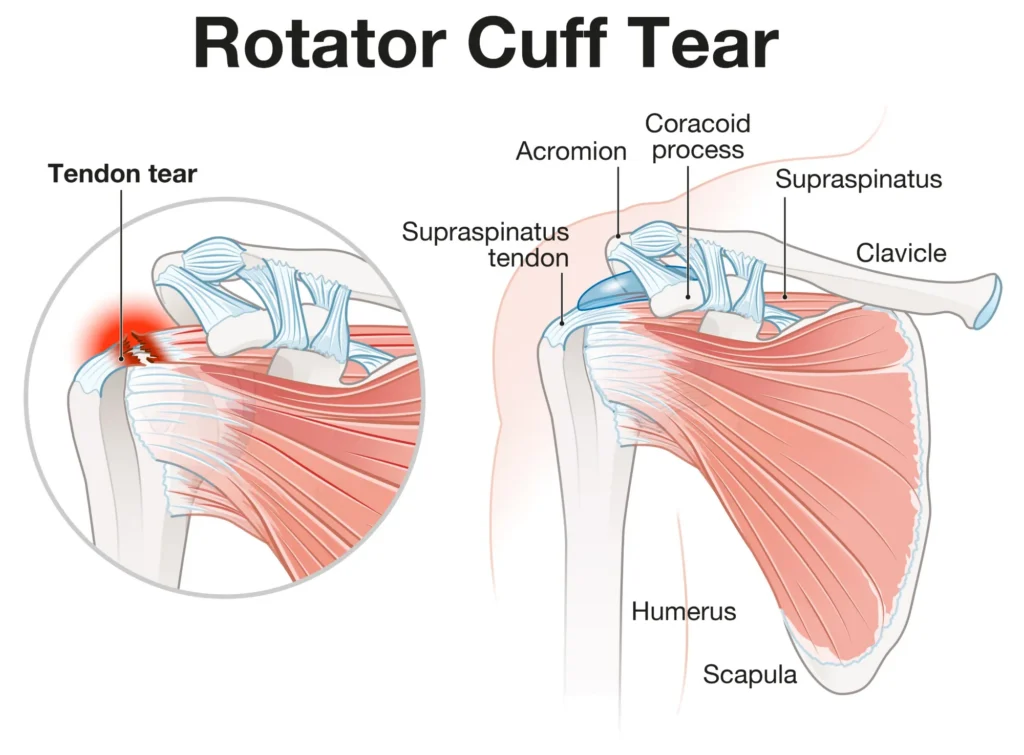
Shoulder impingement happens when the rotator cuff tendons get pinched between the top of the arm bone and the bony arch above it. Overhead reaching aggravates it during the day, but at night, certain sleeping positions narrow that same space and reproduce the pinching sensation.
Frozen shoulder, also called adhesive capsulitis, tends to bring a deep, aching pain. It can be especially intense at night, often before stiffness becomes the dominant symptom. Patients frequently tell me the pain woke them up before they noticed any loss of motion.
Shoulder arthritis can also worsen at night as the joint stiffens after hours without movement. Bone-on-bone contact tends to feel worse when the shoulder has been still for a while, then aches further when you try to reposition yourself.
Bursitis, an inflammation of the small fluid-filled sac that cushions the shoulder, follows a similar pattern to impingement and often overlaps with it.
The common thread across all of these is compression and stillness. A joint that’s already inflamed or damaged doesn’t tolerate sustained pressure well, and a bed does exactly that for six to eight hours at a stretch.
Why This Goes Beyond a Bad Night’s Sleep
It’s tempting to treat shoulder pain at night as a nuisance you can tough out. I’d push back on that framing. Sleep is when your body does much of its repair work, and tissue that’s already irritated needs that repair time more than most. Patients who go weeks or months without restful sleep often show up more fatigued, more irritable, and, in my experience, slower to recover once treatment finally starts.
There’s a practical side to this too. Poor sleep can lower your pain threshold, which means the same shoulder problem can start to feel worse than it actually is. I’ve watched patients improve on multiple fronts when we address the underlying cause and their sleep starts to normalize. Their mood lifts, their energy comes back, and the shoulder itself tends to respond better to therapy when a patient isn’t running on exhaustion.
What I See in My Patients
The story a patient tells me about their sleep points me toward a diagnosis before I even examine the shoulder. For example, many patients with rotator cuff involvement usually describe pain that’s localized and gets sharply worse the moment they roll onto that side. Patients with frozen shoulder more often describe a dull, diffuse ache that shows up regardless of position. They also notice a growing sense that the shoulder just doesn’t move the way it used to.
I also pay attention to how patients have adapted. Propping themselves up with extra pillows, sleeping in a recliner, or switching to the opposite side for months at a time are all things my patients mention almost in passing. They tell me a lot, though, about how long this has been going on and how much it’s affecting daily life. I think it’s worth saying plainly: if you’ve restructured how you sleep to work around your shoulder, that’s not a minor inconvenience. That’s a signal the joint needs attention.
Signs Your Night Pain Deserves a Closer Look
Not every ache needs an appointment right away, but certain patterns tell me it’s time for a proper evaluation. Consider scheduling a visit if you’re dealing with any of the following:
- Night pain that has lasted for weeks without improvement
- Pain severe enough that it wakes you up multiple times per night
- Weakness when lifting your arm or reaching overhead during the day
- A noticeable loss of range of motion, especially with reaching behind your back
- Night pain that started after a fall, lifting injury, or other specific event
If your sleep has been disrupted for weeks and over-the-counter measures aren’t helping, I’d rather see you sooner than later. Structures that stay irritated for a long stretch of time tend to take longer to calm back down once treatment starts.
My Approach to Treatment
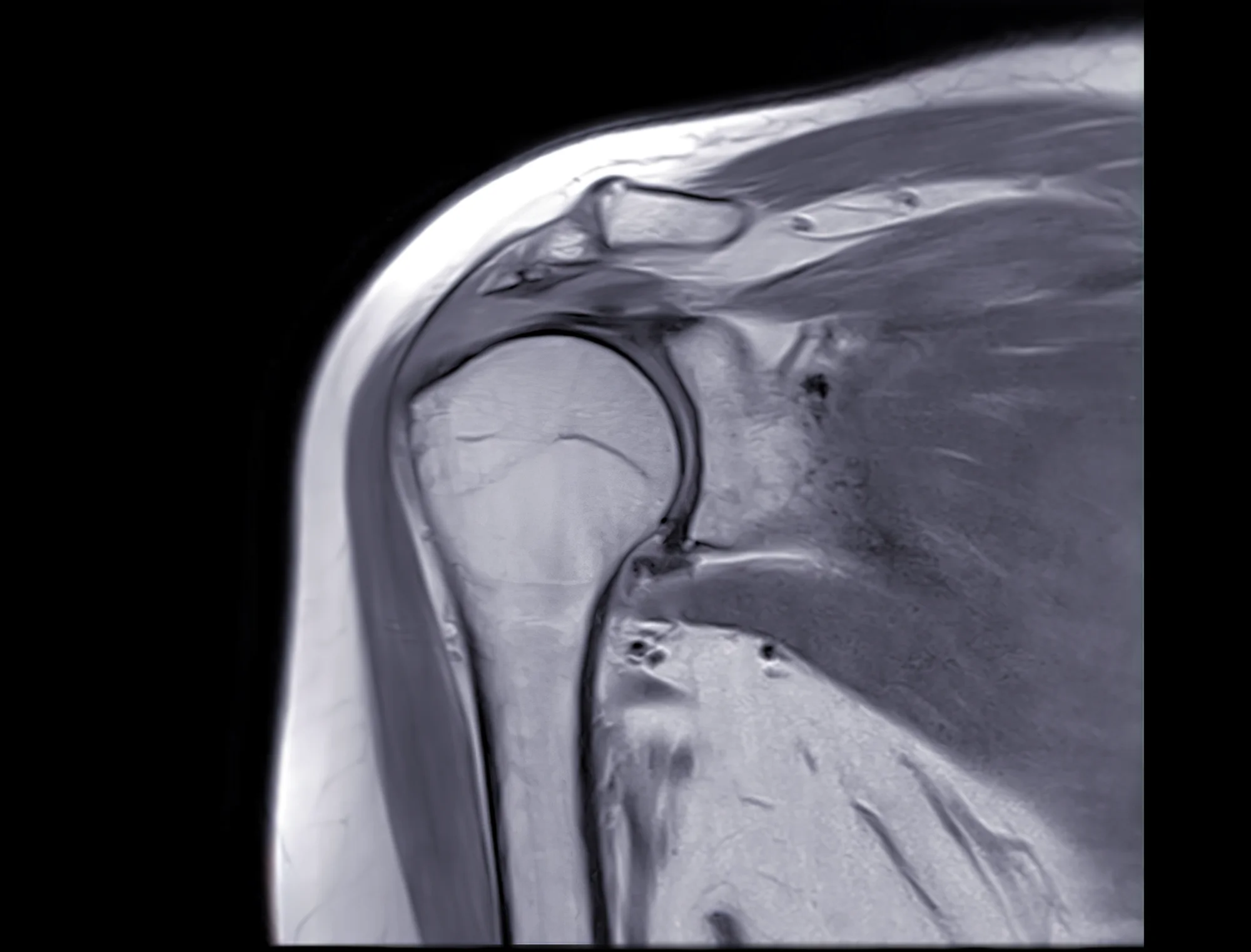
When a patient comes to me with shoulder pain at night, I start with a detailed history. That’s followed by a physical exam that tests strength, motion, and stability. From there, imaging often plays a role. X-rays help me rule out arthritis or bone changes. An MRI gives me a clear picture of the rotator cuff and surrounding soft tissue when I suspect a tear or significant inflammation.
My philosophy is to match the treatment to what’s actually driving the pain, not to jump straight to the most aggressive option. For tendinopathy, impingement, and early bursitis, I typically start with activity modification. A course of physical therapy aimed at restoring shoulder blade mechanics, plus anti-inflammatory medication when appropriate, rounds out the plan.
Some patients need more. For a confirmed rotator cuff tear that hasn’t responded to conservative care, or a large tear affecting an active lifestyle, I may discuss arthroscopic repair. This minimally invasive approach lets me address the torn tendon through small incisions, and most of my patients are able to return home the same day. Recovery isn’t instant. Protecting the repair in the early weeks matters just as much as the surgery itself.
Frozen shoulder gets a different approach entirely. Since it’s a capsule problem rather than a tendon problem, treatment centers on restoring motion through therapy, targeted injections, and patience. This condition tends to improve in stages, and I try to set realistic expectations early so patients aren’t discouraged by a slower timeline.
For patients whose night pain traces back to advanced arthritis, we have a longer conversation. Joint-preserving options come first, and surgery like shoulder replacement only enters the picture once conservative measures have been exhausted. I’d rather protect your own anatomy for as long as it reasonably serves you.
When Sleep Position Alone Isn’t the Fix
A lot of patients try to solve shoulder pain at night on their own before coming in, and I don’t blame them. Pillow adjustments, over-the-counter pain relievers, and sleeping on the opposite side are all reasonable first steps. But when those strategies stop working, or you find yourself avoiding your own bed altogether, that’s a sign. The underlying problem has outgrown a self-managed fix. I’d rather identify what’s going on early, while treatment options are still broad. Waiting only risks further stiffness, or a small tear becoming a large one.
Summary
Shoulder pain at night usually traces back to a specific, identifiable cause, whether that’s a rotator cuff problem, impingement, frozen shoulder, or arthritis. The pattern of your symptoms often points toward which one. Most patients respond well to a structured non-surgical plan built around physical therapy and activity changes. Others benefit from a more direct surgical approach when conservative care hasn’t worked. If shoulder pain has been interrupting your sleep for several weeks, don’t wait it out indefinitely. Schedule an appointment so we can figure out what’s driving it and build a plan to get your nights back.
Frequently Asked Questions
Why does my shoulder hurt more at night than during the day?
Lying down changes how pressure is distributed across the shoulder. Sleeping on the affected side compresses irritated tendons directly. Even lying on your back can put the shoulder in a position that narrows the space around the rotator cuff. Reduced movement overnight can also let inflammation and stiffness build up.
Can shoulder pain at night go away on its own?
Mild cases sometimes improve with rest, activity changes, and time. Ongoing night pain more often signals a condition like a rotator cuff tear or impingement that tends to persist or worsen without treatment. If your symptoms have lasted more than a few weeks, I’d recommend getting it evaluated rather than waiting to see what happens.
What sleeping position is best for shoulder pain?
Many of my patients find some relief sleeping on their back with a pillow supporting the affected arm. A semi-reclined position that reduces pressure on the joint can help too. That said, sleep position adjustments are a temporary comfort measure, not a substitute for addressing the underlying cause.
Is shoulder pain at night always a sign of a rotator cuff tear?
No. While rotator cuff issues are a common cause, frozen shoulder, arthritis, bursitis, and impingement can all produce very similar night pain. A physical exam and, in many cases, imaging are the only reliable way to know which one you’re dealing with.