Medically reviewed by Benjamin M. Woodhead, DO | Reviewed August 2026
Not every patient who walks into my Lincoln office wants to hear the word surgery, and I understand that completely. When I recommend an arthroscopic rotator cuff repair, one of the first questions I usually hear back is some version of, “What if I just wait?” It’s a fair question, and I would probably ask it too. But after years of repairing shoulders across Nebraska, I’ve learned that the decision to delay rotator cuff surgery isn’t always as low-risk as it feels in the moment. So, what really happens if you delay rotator cuff surgery? Waiting can change what your surgery, and your recovery, eventually look like.
Key Takeaways
- Rotator cuff tears, especially degenerative ones, tend to enlarge over time rather than heal without treatment.
- Delaying rotator cuff surgery for too long can allow muscle atrophy and fatty infiltration to develop, which may complicate repair.
- Waiting isn’t always the wrong choice, but it should be an informed decision made with a specialist, not a default response.
- Certain warning signs can help you decide when it’s time to move forward with treatment instead of continuing to wait.
What I See When Patients Wait
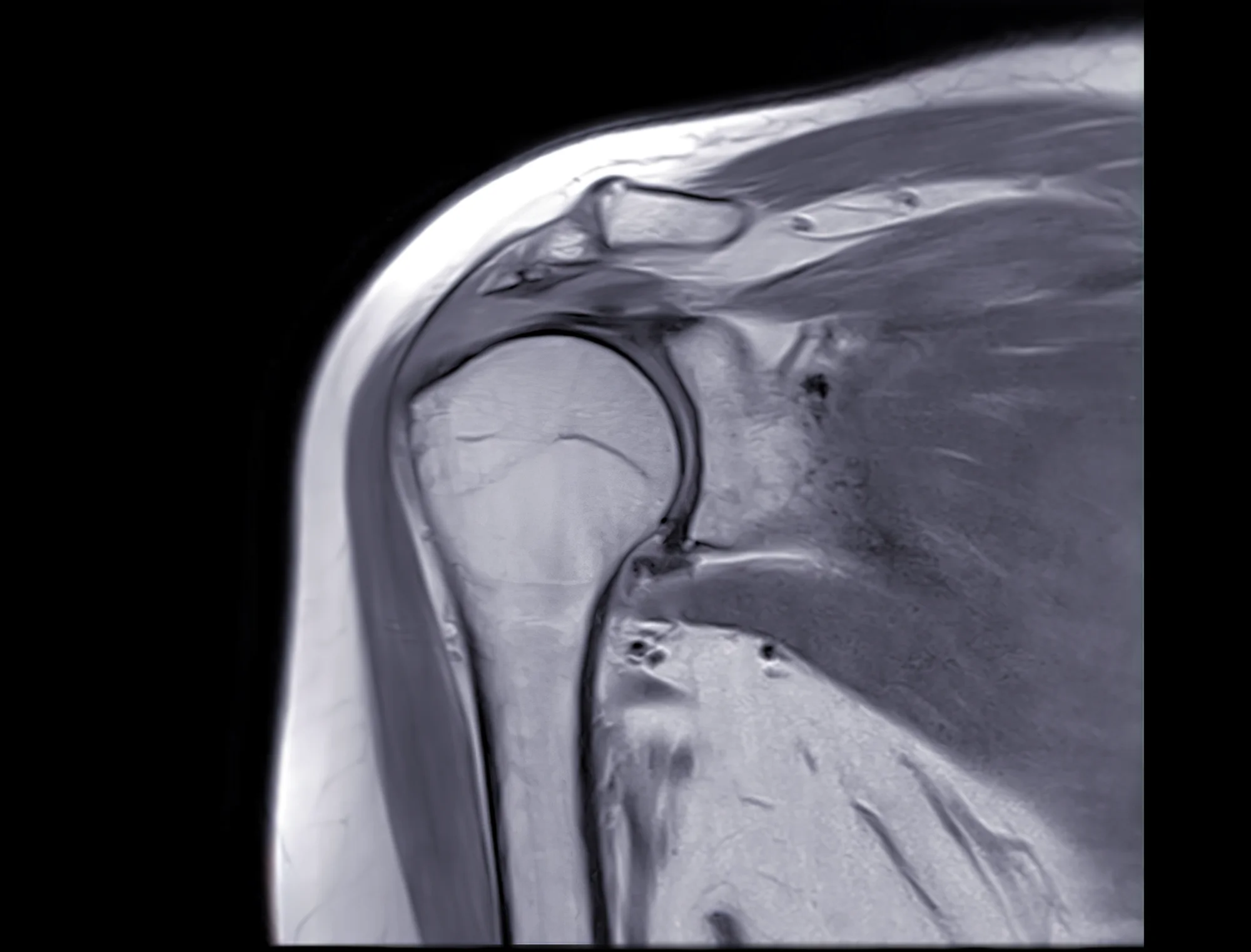
I see this pattern often: a patient gets an MRI, hears the word tear, and decides to sit with it for a while. Sometimes that’s completely reasonable. But I also see patients come back a year or two later, because the pain finally got bad enough that they couldn’t keep working around it, and the shoulder I’m looking at is a different one than what I saw on the original scan.
In some of these cases, the tear is bigger. The muscle behind it has lost some of its bulk and quality, which shows up on imaging as fatty infiltration. The tendon itself may have pulled back from where it originally sat. None of that happens overnight, and none of it is guaranteed to happen. But I’d rather have the conversation about surgery early, while every option is still realistically on the table, than after a tear has progressed to the point where a straightforward repair is no longer possible.
A lot of my patients are farmers, tradespeople, and lifelong Nebraskans who are used to pushing through pain. I respect that instinct, but it’s also exactly the pattern that tends to turn a six-week recovery into something more complicated.
Why Rotator Cuff Tears Rarely Improve Without Treatment
The rotator cuff is made up of four tendons that hold the ball of the shoulder centered in its socket. Tears can happen suddenly, such as from a fall or an awkward lift, or they can develop gradually from years of wear and repetitive motion. Degenerative tears are the more common type, and they tend to be the ones that worsen quietly.
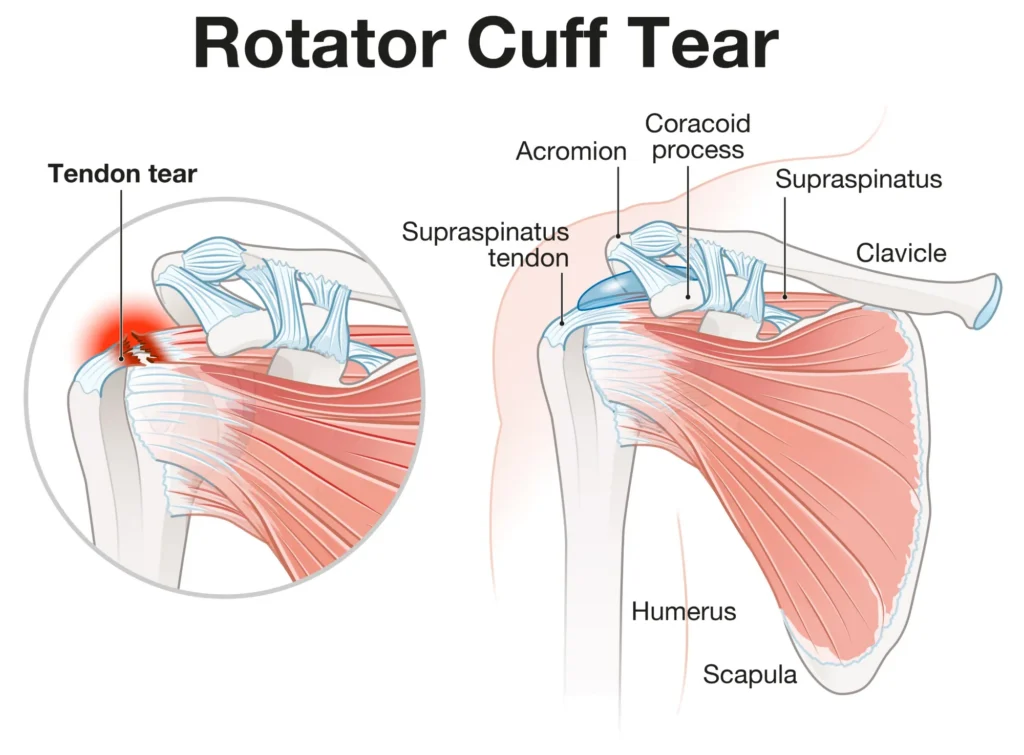
Tendon tissue has a relatively limited blood supply compared to muscle, which is part of why these tears don’t typically heal on their own the way a pulled muscle might. Physical therapy, activity changes, and anti-inflammatory medication can often reduce pain and improve function, but those approaches manage symptoms around the tear rather than closing the tear itself. That distinction matters when deciding how long to wait.
What Actually Happens Inside the Shoulder When You Wait
When a tendon pulls away from the bone and stays that way, the muscle attached to it can begin to shorten and lose some of its normal fiber quality over months to years. Surgeons call this combination of shortening and fatty change muscle atrophy and fatty infiltration, and it tends to progress the longer a tear goes unaddressed. A tendon that has retracted and a muscle that has weakened are both harder to restore to their original position and strength during repair.
In more advanced cases, a tear that might have been fully repairable early on can become massive or irreparable. When that happens, a standard rotator cuff repair may no longer be the right option. Instead, patients sometimes need a more involved reconstruction, or in cases where the rotator cuff has stopped functioning altogether, a reverse shoulder replacement, which uses the deltoid muscle to power arm movement instead of the damaged cuff.
None of this happens on a predictable schedule. I’ve seen tears stay essentially unchanged for years, and I’ve seen others progress noticeably within a single season. That unpredictability is exactly why I don’t think patients should treat a diagnosis as something to file away and forget.
When Delaying Might Be a Reasonable Choice
I’m not in the business of recommending surgery just because a scan shows a tear. Small partial tears, especially in patients who aren’t particularly active overhead, often respond well to physical therapy and activity modification, and surgery may never become necessary. Older patients with lower functional demands may also reasonably choose to manage symptoms conservatively for years.
The distinction I try to help patients understand is the difference between monitored delay and unmonitored delay. If we’re checking in, tracking symptoms, and repeating imaging when it makes sense, waiting can be a legitimate strategy.
Age and activity level factor into this as well. A retiree who mostly needs the shoulder for everyday tasks around the house has a different risk calculation than a competitive golfer or someone whose job involves regular overhead lifting. I try to match the plan to the person in front of me instead of applying the same recommendation to every tear that crosses my desk.
My Approach to Treatment
When I sit down with a patient who’s on the fence about surgery, I try to give them a realistic picture rather than a scare tactic. I’ll walk through the size and pattern of the tear on their MRI, how it compares to what I typically see progress quickly versus slowly, and what their specific goals are. A competitive athlete or an active tradesperson gets a different conversation than someone who’s mostly looking to garden and play with grandkids without pain.
If I do recommend moving forward with an arthroscopic repair, I explain the general phases up front: a period of protected motion in a sling, followed by passive range of motion, then active motion, and finally strengthening, with return to full activity typically progressing over several months. I’d rather patients start that process with a tear that’s still straightforward to fix than wait until the timeline, and the surgery itself, gets longer.
Signs It May Be Time to Stop Waiting
- New or worsening weakness lifting the arm overhead. If tasks like reaching for a top shelf or lifting a grocery bag are getting noticeably harder rather than staying the same, the tear may be enlarging.
- Night pain that keeps escalating despite rest and ice. Pain that continues to intensify, rather than plateau, is often a sign the underlying problem isn’t stabilizing on its own.
- A growing sense that the shoulder is losing strength week to week. A shoulder that felt merely sore last month but now feels genuinely weak has usually changed, not just flared up.
Summary
Delaying rotator cuff surgery isn’t automatically dangerous, and I’ve had plenty of patients manage their tears successfully with therapy alone. But tears, particularly degenerative ones, don’t reliably stay the same size, and waiting without a plan can turn a straightforward repair into a more complex procedure with a longer road back. If you’ve been sitting on a diagnosis, or you’ve noticed your shoulder is trending in the wrong direction, the next step isn’t necessarily surgery. It’s scheduling an evaluation so we can see where your tear stands today.
Frequently Asked Questions
How long can I safely delay rotator cuff surgery?
There’s no single timeline that applies to every patient. Small, stable tears in lower-demand individuals may be reasonably monitored for months or years. Larger or worsening tears carry more risk the longer they go untreated. An individualized evaluation is the only reliable way to know where your tear falls on that spectrum.
What happens if a rotator cuff tear becomes too large to repair?
When a tear becomes massive or irreparable, other options may be considered, including reverse shoulder replacement.
Is it too late for surgery if I’ve already waited a year or more?
Not necessarily. Many patients who’ve waited longer than they intended still have tears that are repairable. The best way to know is with a current evaluation and imaging rather than assuming too much time has passed. I’d much rather see a patient who’s unsure whether it’s too late than have them avoid the appointment altogether out of that same uncertainty.
What’s the difference between watchful waiting and simply ignoring the problem?
Watchful waiting involves regular follow-up, symptom tracking, and repeat imaging when appropriate, all guided by an experienced shoulder specialist. Ignoring the problem means going without any of that oversight, which makes it harder to catch a tear that’s quietly getting worse.