Medically reviewed by Benjamin M. Woodhead, DO | Reviewed May 2026
If your shoulder has been getting stiffer and more painful over the past several weeks or months, you may have heard the term “frozen shoulder.” It’s a condition I see regularly here in Lincoln, Nebraska, and one that tends to cause a lot of confusion, especially because the frozen shoulder stages can look quite different from one another. Understanding what’s happening at each phase, and what to realistically expect along the way, can make a difference in how you navigate this diagnosis. In this post, I’ll walk you through the stages of frozen shoulder, explain why it happens, and outline the treatment options that may help you get your motion and comfort back.
Key Takeaways
- Frozen shoulder, also called adhesive capsulitis, causes progressive stiffness and pain due to thickening of the joint capsule.
- The condition typically evolves through three stages: freezing, frozen, and thawing. Each stage can last several months, and the full process may take a year or longer to resolve.
- Treatment options include physical therapy, medications, targeted injections, and in some cases, procedural intervention.
- If your shoulder motion has been steadily declining, it’s worth getting evaluated by a shoulder specialist who can confirm the diagnosis and guide your care.
What Is Frozen Shoulder?
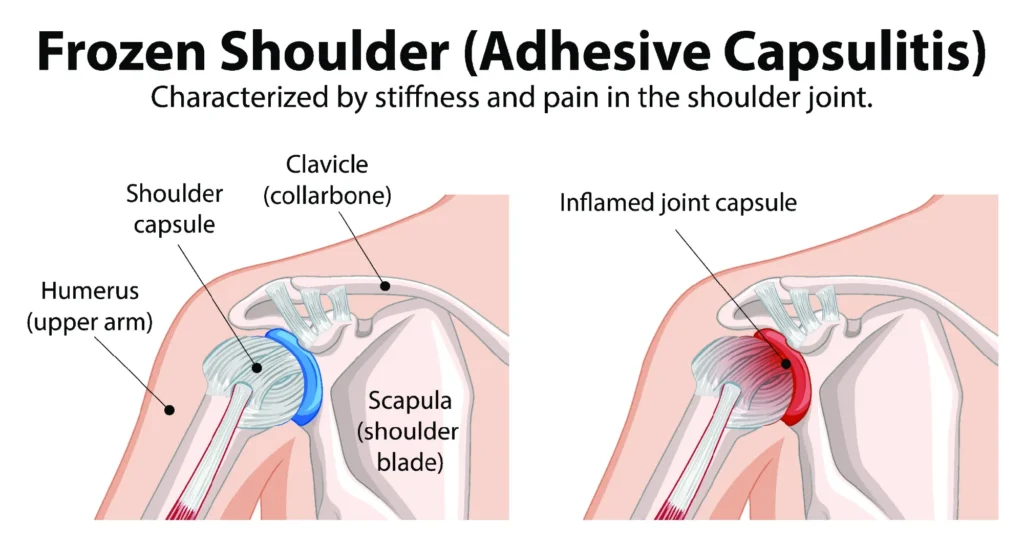
Frozen shoulder, also known as adhesive capsulitis, is a condition in which the tissue surrounding the shoulder joint (a structure called the joint capsule) thickens, tightens, and becomes inflamed. As that capsule contracts, it limits how far the shoulder can move in any direction. The joint essentially becomes bound down.
Many people notice it gradually. There’s usually a period of increasing ache and discomfort first, followed by a slow but significant loss of motion. Eventually, everyday activities like reaching overhead, fastening a seatbelt, or brushing your hair can become genuinely difficult.
Frozen shoulder is different from other common shoulder conditions like a rotator cuff tear or shoulder impingement. While those conditions often involve pain with specific movements, frozen shoulder tends to restrict motion in all directions.
Who Tends to Develop Frozen Shoulder?
Frozen shoulder most commonly affects people between the ages of 40 and 60, and it tends to occur more often in women than men. Certain factors may increase your risk. These can include:
- A period of shoulder immobility, such as after a fracture, surgery, or injury that required the arm to be kept still
- Diabetes; individuals with diabetes appear to develop frozen shoulder at a higher rate
- A recent cardiac event or stroke
- Thyroid conditions
Frozen shoulder can and does develop in people without any obvious risk factors. In some cases, there’s no clear cause at all. When no underlying reason is identified, it may be referred to as primary adhesive capsulitis. When it develops after a known event or condition, it’s sometimes called secondary.
The Three Stages of Frozen Shoulder
The condition tends to follow a fairly predictable pattern, even if the timeline can vary from person to person. Knowing which stage you’re in helps set realistic expectations and guides treatment decisions.
Stage 1: The Freezing Stage
This is the first and often the most painful phase. During the freezing stage, the shoulder capsule begins to thicken and inflame, and pain tends to gradually increase. You may notice an ache that’s hard to pinpoint, discomfort at night that interrupts sleep, and a progressive sense that your shoulder isn’t moving as freely as it used to.
Motion starts to become limited, though the restriction may be subtle at first. Many patients in this stage describe the pain as disproportionate to what they can see; nothing looks wrong from the outside, but the shoulder is quite uncomfortable. The freezing stage can last anywhere from a few weeks to many months.
Stage 2: The Frozen Stage
By the time the frozen stage arrives, the acute pain often begins to ease somewhat. That may sound like good news, and in some ways, it is. This stage is defined by a significant reduction in shoulder motion. The shoulder may feel stiff and heavy, with motion restricted in nearly every direction.
Daily tasks that most of us take for granted can become challenging or impossible. The frozen stage tends to last somewhere between four and twelve months, though there can be a lot of individual variation. A thorough evaluation, which may include imaging, can help rule out other conditions and confirm the diagnosis.
Stage 3: The Thawing Stage
The thawing stage is, understandably, the one most patients are waiting for. This is when the shoulder gradually begins to loosen, and motion slowly starts to return. Pain tends to diminish further during this phase, though it may not disappear entirely right away.
Recovery during the thawing stage can feel slow and uneven. Some weeks may bring noticeable improvement, while others may seem stagnant. The thawing stage may last anywhere from several months to well over a year. Most patients do recover meaningful motion and comfort, though some residual stiffness may persist in certain cases.
How Is Frozen Shoulder Diagnosed?
Diagnosing frozen shoulder typically begins with a thorough conversation about your symptoms, including when the stiffness started, how it has progressed, whether you’ve had any previous shoulder problems or injuries, and how your daily function has been affected. I also ask about medical history, since conditions like diabetes can be relevant.
A physical examination is central to the diagnosis. During the exam, I assess how far the shoulder can move both actively (when you move it yourself) and passively (when I move it for you). In frozen shoulder, motion tends to be limited in both scenarios.
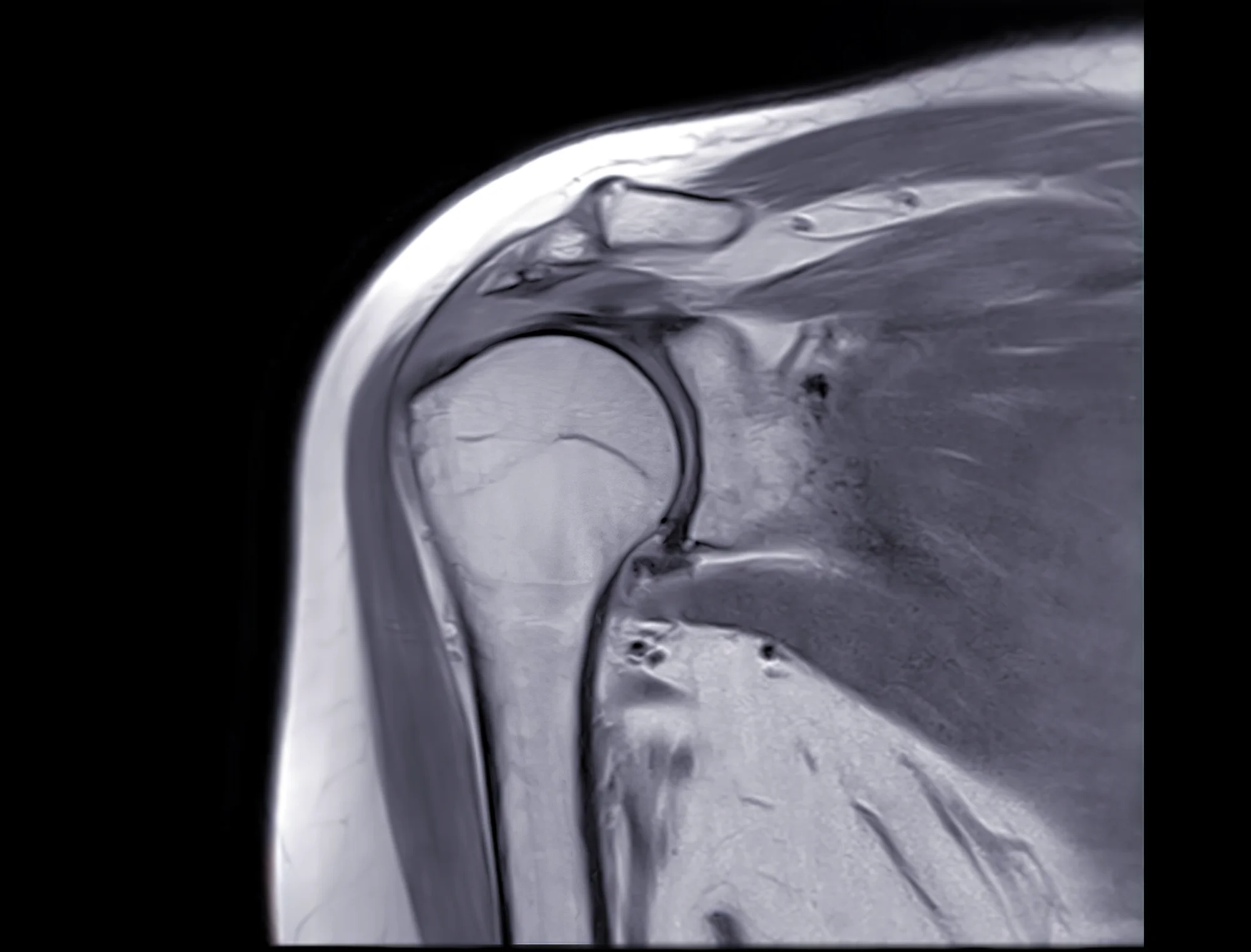
Imaging studies, including X-rays and sometimes an MRI, may be ordered to rule out other causes of pain and stiffness, such as arthritis or a rotator cuff tear. The imaging in frozen shoulder may look fairly normal, but it helps ensure we’re not missing something else contributing to your symptoms.
Treatment Options for Frozen Shoulder
Management of frozen shoulder centers on reducing pain, preserving as much motion as possible, and supporting the shoulder as it works through its natural progression. The right combination of treatments can vary depending on which stage you’re in and how your shoulder is responding.
Physical Therapy
Physical therapy is often a component of frozen shoulder management. A therapist can guide you through targeted mobility exercises designed to gently encourage motion without provoking an inflammatory flare. The approach during the freezing stage may be gentler and more focused on pain control, while the frozen and thawing stages may allow for more active range-of-motion work. In my practice, I find that patients who stick with a consistent home program between appointments tend to move through the thawing stage more smoothly than those who stretch only during clinic visits.
Consistency tends to matter a great deal here. Short, regular sessions of guided stretching may be more effective than infrequent, aggressive attempts to force the shoulder to move.
Medications
Anti-inflammatory medications can help manage pain and reduce swelling, particularly during the earlier and more painful stages. Over-the-counter options like ibuprofen or naproxen may offer some relief. In some cases, oral corticosteroids may be considered.
Targeted Injections
Corticosteroid injections into the shoulder joint may help reduce inflammation and improve comfort, making it easier to participate in physical therapy. These are generally most effective when given early in the course of frozen shoulder, particularly during the freezing stage when pain and inflammation are most prominent.
Hydrodilatation, a procedure in which fluid is injected into the joint capsule to stretch and distend it, is another option that may be discussed in certain cases. It’s typically considered when pain and stiffness are persistent and other conservative approaches haven’t provided adequate relief.
Procedural and Surgical Options
When a patient isn’t making adequate progress with conservative care, procedural options may be discussed. Shoulder arthroscopy allows me to directly release the thickened, contracted capsule and remove scar tissue that may be restricting motion. Manipulation under anesthesia is another option that has traditionally been used for frozen shoulder, though arthroscopic release has become the more common surgical approach when intervention is needed. As with any procedure, the decision involves weighing the potential benefits against the risks and understanding what recovery will look like.
Summary
Frozen shoulder is a condition that tends to follow a recognizable pattern through three distinct frozen shoulder stages: freezing, frozen, and thawing. Each stage comes with its own set of challenges, and the total recovery process may take anywhere from one to three years. That’s a significant commitment of time, but with the right treatment approach, many patients find their way back to meaningful comfort and function.
If your shoulder has been getting progressively stiffer, or if you’re already in the middle of this process and want a clearer road map, I’d encourage you to schedule an appointment so we can evaluate where you are and build a plan that makes sense for your specific situation.
Frequently Asked Questions
Can frozen shoulder go away on its own?
In many cases, frozen shoulder improves over time without surgical intervention. The condition tends to move through its three stages and gradually resolve, though this process can take a year or more. Appropriate management may help reduce pain, preserve motion during the process, and potentially shorten the overall recovery timeline.
What makes frozen shoulder worse?
Prolonged immobility tends to make frozen shoulder worse. While the shoulder may be painful, avoiding all movement can allow the capsule to contract further and make recovery more difficult. At the same time, overly aggressive stretching during the early, inflammatory stages can increase pain without improving motion. Guided physical therapy helps strike the right balance. Certain health conditions may also make the condition more difficult to treat and extend the recovery timeline.
How do I know which stage of frozen shoulder I’m in?
The stages can be somewhat difficult to identify without a clinical evaluation, since the boundaries between them aren’t always perfectly clear-cut. Generally speaking, the freezing stage is characterized by increasing pain with mild motion loss; the frozen stage by more pronounced motion restriction with somewhat reduced pain; and the thawing stage by gradually improving motion and comfort. A shoulder specialist can assess your range of motion and pain pattern to get a sense of where you are in the process and what that means for your treatment plan.