Medically reviewed by Benjamin M. Woodhead, DO | Reviewed August 2026
Shoulder pain has a way of becoming background noise. Patients tell me they’ve been living with an ache for six months, sometimes two years, before they ever call my office. They adjusted how they sleep, switched which arm they use to carry groceries, and told themselves it would eventually calm down on its own. I understand the instinct completely. But choosing to ignore a rotator cuff tear rarely makes the problem disappear, and in my experience, it usually makes the eventual visit to my office a more complicated one.
Key Takeaways
- Many rotator cuff tears don’t announce themselves with dramatic pain, which makes them easy to dismiss for months or years.
- Ignoring a rotator cuff tear may allow a partial tear to progress into a full-thickness tear over time.
- Compensating with other muscles to avoid shoulder pain may create secondary strain in the neck, back, or opposite shoulder.
- Getting evaluated early doesn’t automatically mean surgery. It means having information instead of guesswork.
What I See in Patients Who Waited Too Long
The patients I worry about most aren’t usually the ones who call me the week their shoulder starts hurting. They’re the ones who’ve quietly rearranged their entire life around a bad shoulder without realizing how far that rearranging has gone. They stopped reaching overhead at the grocery store. They started opening jars with their other hand. They gave up golf, or gardening, or picking up their grandkids, so gradually that it didn’t register as a loss until we talk it through in clinic.
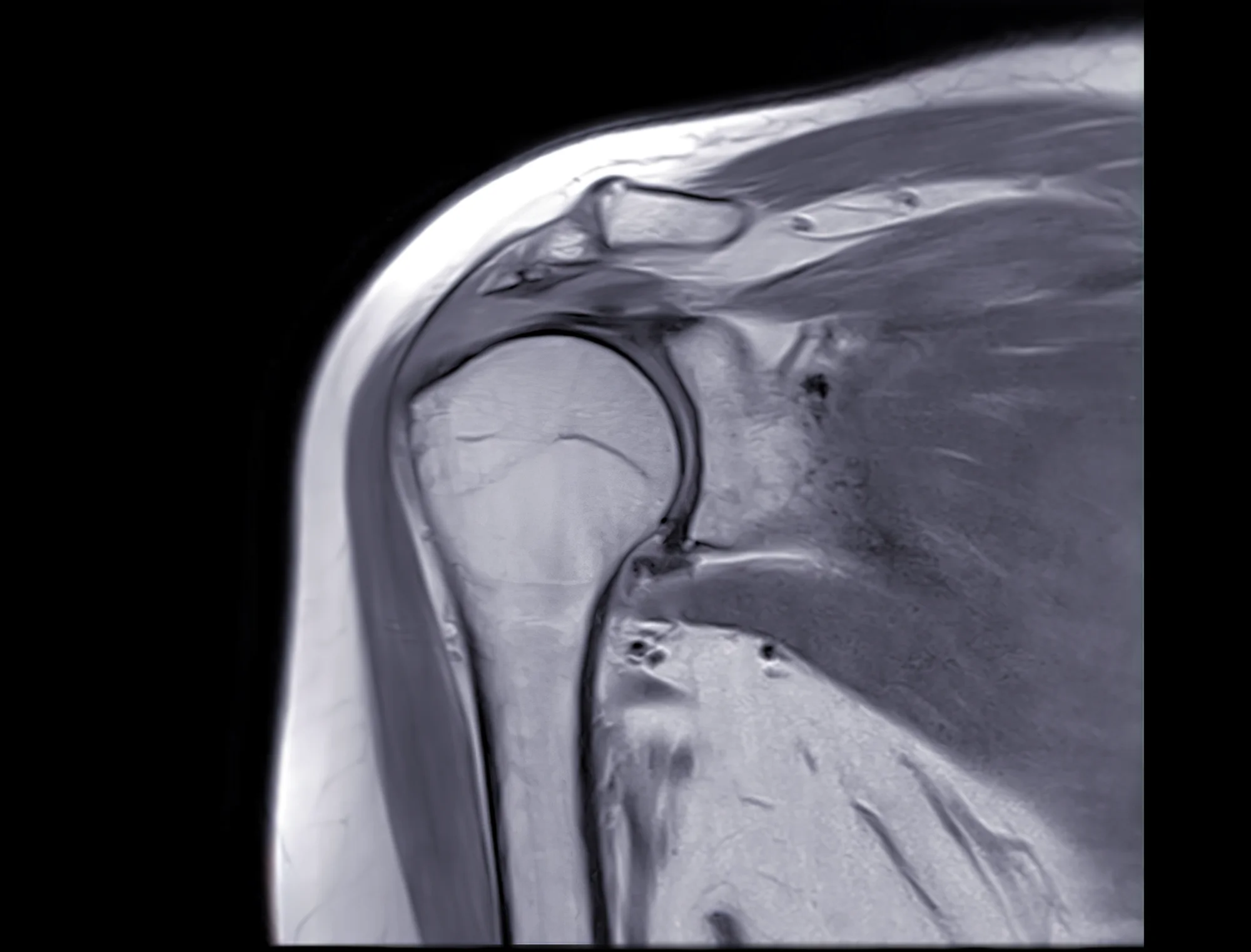
I see this constantly in farmers and tradespeople across Nebraska who are used to working through discomfort. By the time they finally schedule an appointment, the imaging may reveal what rotator cuff tear symptoms alone wouldn’t have suggested. That gap between how a shoulder feels and what’s actually happening inside it is one of the main reasons I don’t think it’s wise to self-diagnose your way through a suspected tear.
How a Rotator Cuff Tear Can Progress When Left Alone
Rotator cuff tears fall into two general categories. Acute tears happen suddenly, often from a fall, a heavy lift, or a direct blow to the shoulder, and they tend to cause immediate pain that’s hard to ignore. Degenerative tears are different. They develop gradually from age-related wear, repetitive overhead use, or reduced blood flow to the tendon, and they can start as a small partial-thickness tear that doesn’t cause much trouble at all.
That second category is the one I see people ignore most often, and it’s also the one most likely to progress. A partial tear left untreated can extend into a full-thickness tear over months or years. Certain factors tend to raise that risk, including older age, participation in overhead sports, jobs involving repetitive overhead motion, a previous shoulder injury, and family history of rotator cuff problems.
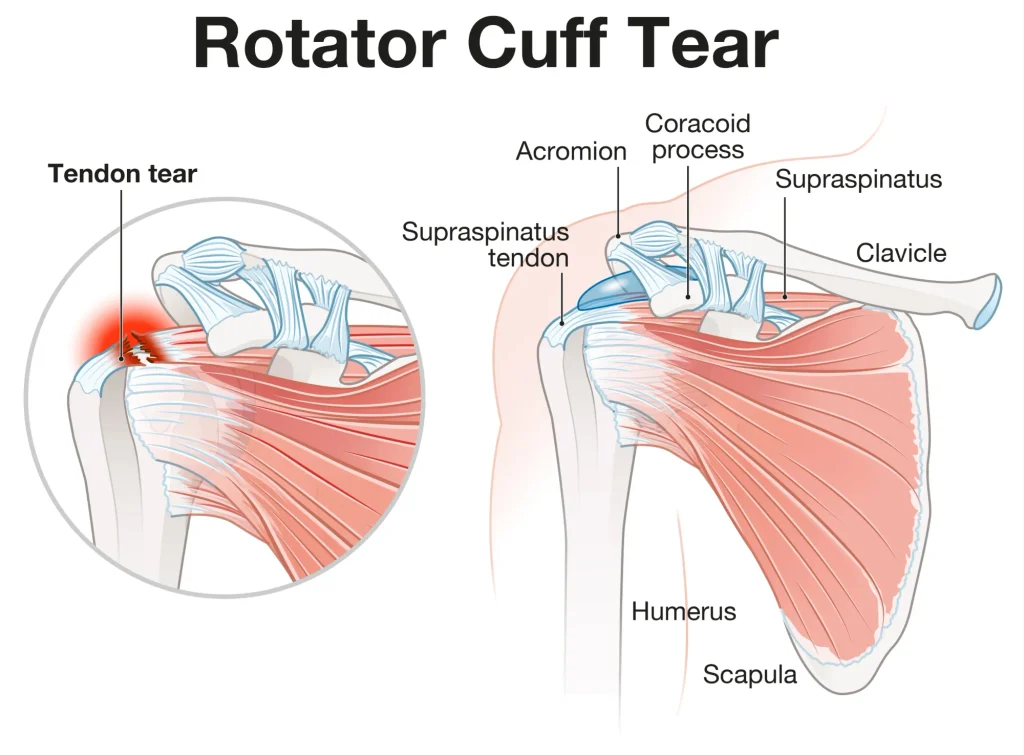
None of this means every partial tear is destined to become a full-thickness one. Plenty stay stable for years, especially in patients who modify their activity and stay consistent with therapy. The trouble is that there’s no reliable way to know in advance which tears will hold steady and which will progress without periodically checking in on them, which is difficult to do if no one’s tracking the tear in the first place.
The Ripple Effect on the Rest of the Body
Patients who avoid using an injured shoulder may shift load onto the neck, the upper back, and the opposite arm without realizing it. Over time, that compensation can create its own pain patterns that have nothing to do with the original tear but everything to do with how long it went unaddressed.
Sleep tends to take a hit too. Night pain is one of the more common complaints I hear from patients with rotator cuff tears, and chronic poor sleep affects far more than the shoulder. I’ve had patients describe feeling generally worn down, irritable, or less capable at work, only to realize months later that most of it traced back to a shoulder they’d been putting off dealing with.
By the time a patient has been compensating for a year or more, untangling which symptoms come directly from the shoulder and which developed as a result of avoiding it becomes its own part of the evaluation.
When Symptoms Are Easy to Write Off
It makes sense that people delay. There’s often no single moment of injury to point to, which makes it easy to assume the pain is just normal wear from getting older or working hard. Many patients can still lift their arm and go about their day, so it doesn’t feel like an emergency. Some tears cause remarkably little discomfort at first and are only discovered later, sometimes on imaging ordered for an unrelated reason. I’d rather patients treat that ambiguity as a reason to get checked out, not a reason to wait. A short evaluation can usually tell us fairly quickly whether we’re dealing with a minor strain that will settle down with rest, or a tear that’s worth tracking more closely.
My Approach to Treatment
I focus on getting a clear picture through history, a physical exam, and imaging when appropriate, so we know exactly what we’re dealing with. Getting evaluated is not the same thing as committing to surgery, and I think that misconception keeps a lot of people away longer than it should.
Plenty of patients I see do well with activity modification, targeted physical therapy, and anti-inflammatory medication, especially when we catch things at a reasonable stage. Others need an arthroscopic repair, and for those patients, I’d rather operate on a tear that hasn’t had years to retract and weaken the surrounding muscle. Either way, the plan comes from what I find during the evaluation, not from assumptions made before anyone’s looked at the shoulder.
I also spend time addressing whatever compensation patterns have crept in, since strengthening the shoulder alone doesn’t always undo months of favoring the neck or the opposite arm. Patients who’ve waited a long time sometimes need a slightly broader rehabilitation plan than the tear alone would suggest, and I think it’s worth setting that expectation up front rather than letting it surprise them later.
Signs Your Shoulder Pain Shouldn’t Be Ignored Any Longer
- Pain that disrupts your sleep on a regular basis. Occasional discomfort at night is common, but pain that consistently wakes you up deserves a closer look.
- Noticeable weakness compared to your other arm. If one side clearly struggles with tasks the other handles fine, that asymmetry is worth evaluating.
- Pain that lingers beyond a few weeks despite rest. Most simple strains improve with time off; pain that plateaus or worsens usually means something more is going on.
Summary
Ignoring a rotator cuff tear doesn’t make it go away. It just removes your ability to influence how the story unfolds. Partial tears can progress into full-thickness ones, compensation patterns can create new problems elsewhere in the body, and the gap between how your shoulder feels and what’s actually happening inside it tends to widen the longer it goes unchecked. If you’ve been managing shoulder pain quietly for months, the next step is simply getting it evaluated so you’re working from real information instead of a guess. Whatever we find, you’ll leave that appointment with a clearer plan than the one you walked in with.
Frequently Asked Questions
Can a rotator cuff tear heal if I just leave it alone?
Tendon tissue has a limited blood supply, so most rotator cuff tears don’t heal completely on their own the way a strained muscle might. Some patients find meaningful symptom relief through rest and therapy, but the structural tear itself typically remains unless it’s surgically repaired, which is worth knowing even if you and I ultimately decide surgery isn’t the right fit for you right now.
How do I know if my shoulder pain is a tear or something else?
Several conditions, including bursitis, impingement, labral tears, and arthritis, can cause similar symptoms. The only reliable way to tell them apart is a clinical evaluation that combines your history, a physical exam, and imaging when appropriate.
Is it possible to have a rotator cuff tear without much pain?
Yes. Degenerative tears in particular can cause mild symptoms, or none at all, especially early on. This is one reason relying on pain level alone to decide whether something is wrong can be misleading.
What happens if I wait until the pain becomes unbearable?
By that point, the tear has often had significant time to progress, and the surrounding muscle may have weakened as well. Surgery is frequently still an option, but it may involve a more complex repair and a longer recovery than if the tear had been addressed earlier. It can also mean a longer stretch of rebuilding strength that was lost to compensation, not just repairing the tear itself.