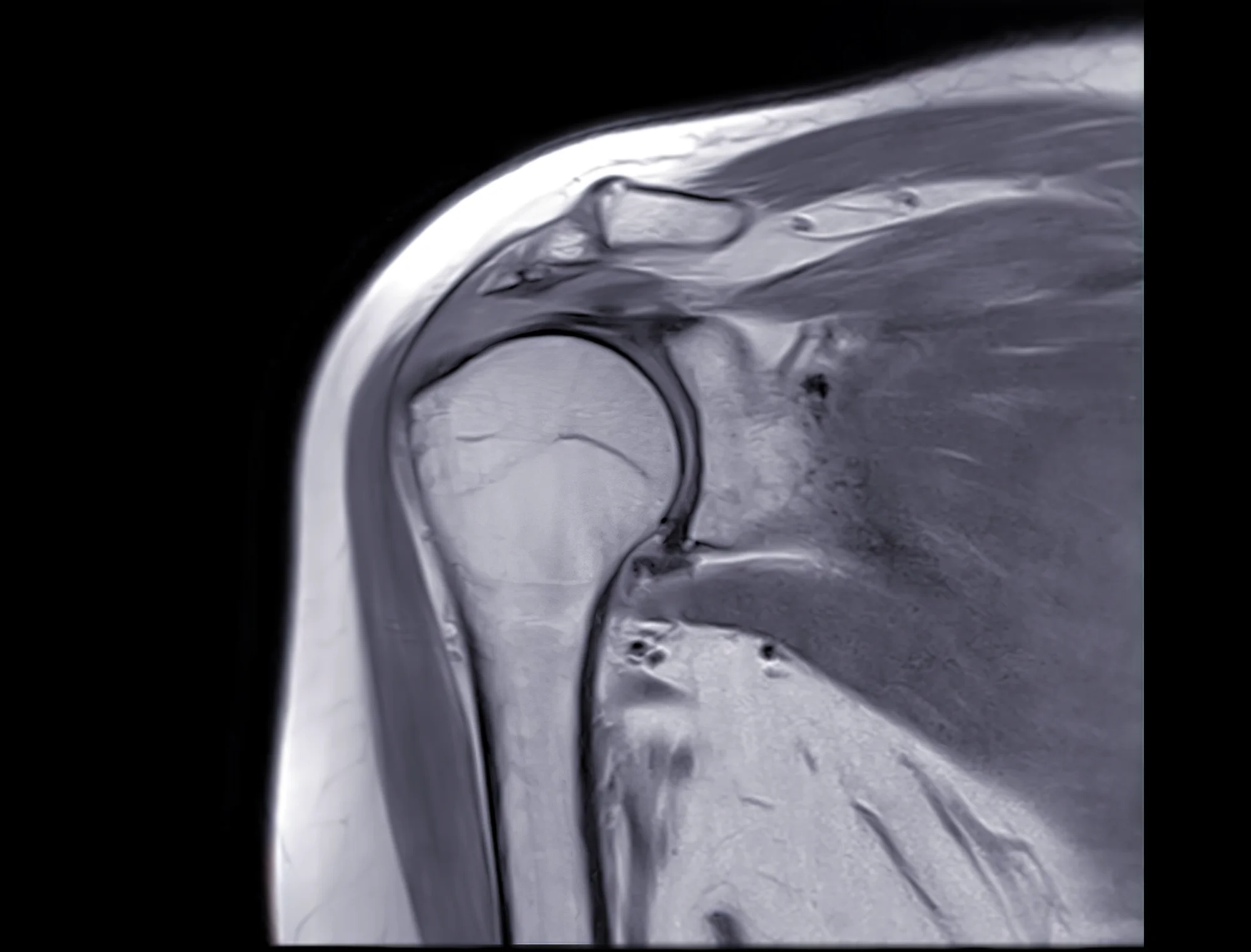
A fall can happen in an instant. One moment you’re walking across an icy parking lot or stepping off a curb, and the next you’re on the ground with a searing pain in your shoulder. Shoulder injuries after a fall are a common reason patients seek evaluation from an orthopedic specialist. The shoulder’s complex anatomy makes it particularly vulnerable during a sudden impact. In this post, we’ll explore the types of injuries that can occur after a fall, how they are diagnosed, what treatment may look like, and when to see a specialist.
Key Takeaways
- Shoulder injuries after a fall can range from mild bruising to fractures, dislocations, and torn tendons or ligaments.
- Treatment options vary widely and may include rest, physical therapy, medications, or surgical intervention depending on the specific injury and individual factors.
- Early diagnosis and appropriate care can play an important role in supporting long-term shoulder function and reducing the risk of chronic problems.
Why the Shoulder Is Vulnerable to Fall-Related Injuries
The shoulder’s remarkable range of motion comes with a trade-off: the joint relies heavily on soft tissues for stability rather than a deep bony socket. The ball of the upper arm bone, called the humeral head, sits in a relatively shallow socket on the shoulder blade known as the glenoid. A ring of cartilage called the labrum deepens that socket somewhat, but the shoulder still depends on the rotator cuff muscles, ligaments, and the joint capsule to stay properly aligned.
When you fall, your natural instinct is often to reach out with your hand or arm. This reaction can transmit force from the wrist through the elbow and into the shoulder joint. A direct fall onto the side of the shoulder can also deliver significant force to the joint and surrounding structures. Either scenario can potentially damage bones, tendons, cartilage, or ligaments.
Age, bone density, and pre-existing conditions may influence what type of injury results from a fall. Older adults may be more susceptible to fractures, while younger individuals and athletes might be more prone to dislocations or soft tissue tears. The specific mechanics of the fall also play a role.
Common Types of Shoulder Injuries After a Fall
Several distinct injuries can occur when the shoulder absorbs the force of a fall. Some involve the bones, while others affect the soft tissues that stabilize and move the joint. In many cases, more than one structure may be injured at the same time.
Shoulder Fractures
Fractures are a frequent result of fall-related shoulder trauma. The three bones most commonly involved are the proximal humerus (the top portion of the upper arm bone), the clavicle (collarbone), and the scapula (shoulder blade).
Proximal humerus fractures tend to be especially common among older adults who fall onto an outstretched arm. Symptoms may include deep pain, swelling, and bruising. Clavicle fractures may produce a visible bump along the collarbone and sharp pain with arm movement. Scapular fractures are less common and typically result from higher-energy impacts.
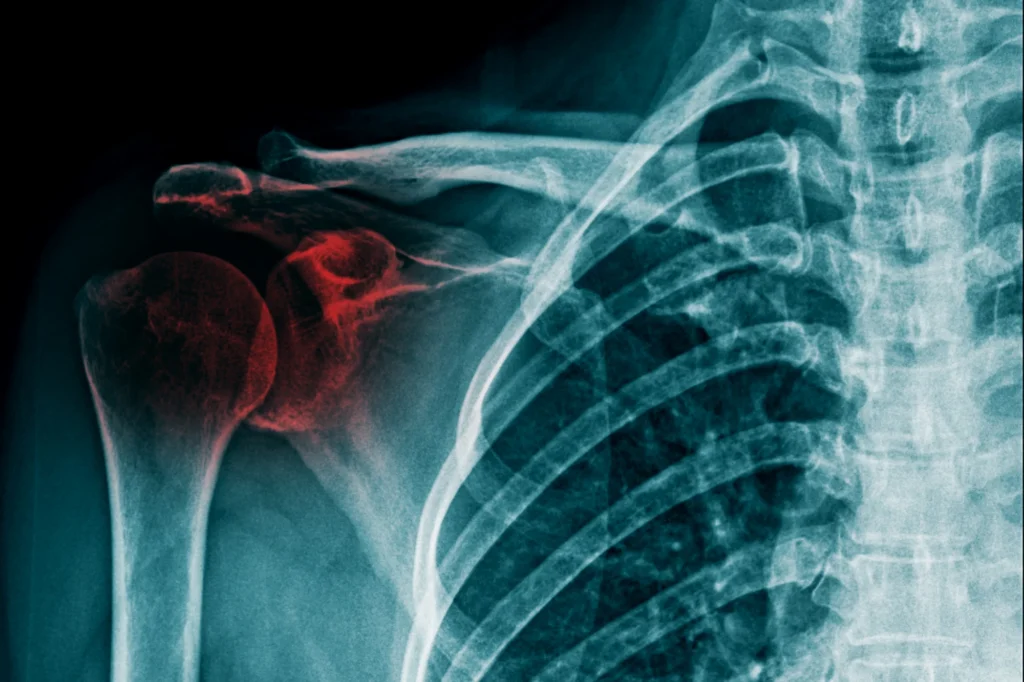
Not all fractures require surgery. Many heal well with a period of immobilization in a sling followed by guided rehabilitation. However, fractures that are significantly displaced, involve the joint surface, or break the bone into multiple fragments may require surgical repair to restore proper alignment.
Shoulder Dislocations and Instability
A shoulder dislocation occurs when the humeral head slips out of the glenoid socket. This injury usually produces immediate, intense pain along with a visible deformity of the shoulder. The arm may appear to hang at an unusual angle, and moving it can feel nearly impossible.
Dislocations can stretch or tear the surrounding ligaments, labrum, and joint capsule. This damage may increase the risk of future dislocations, a condition known as recurrent shoulder instability. Younger patients may face a higher likelihood of repeat episodes, though each case is unique.
Initial treatment typically involves carefully repositioning the bone back into the socket, a process called reduction, performed by a doctor. After reduction, a period of immobilization and physical therapy usually follows. For patients who experience repeated dislocations or persistent instability, surgical stabilization may be considered.
Rotator Cuff Tears
The rotator cuff is a group of four muscles and their associated tendons that surround the shoulder joint. These structures work together to stabilize the humeral head within the socket and power many arm movements. A fall can tear one or more of these tendons, either partially or completely.
Symptoms of a rotator cuff tear may include pain that worsens at night or with overhead activity, weakness when lifting or rotating the arm, and a clicking or catching sensation during movement. Some patients describe a feeling that the arm has become unreliable or that they cannot trust it to hold weight.
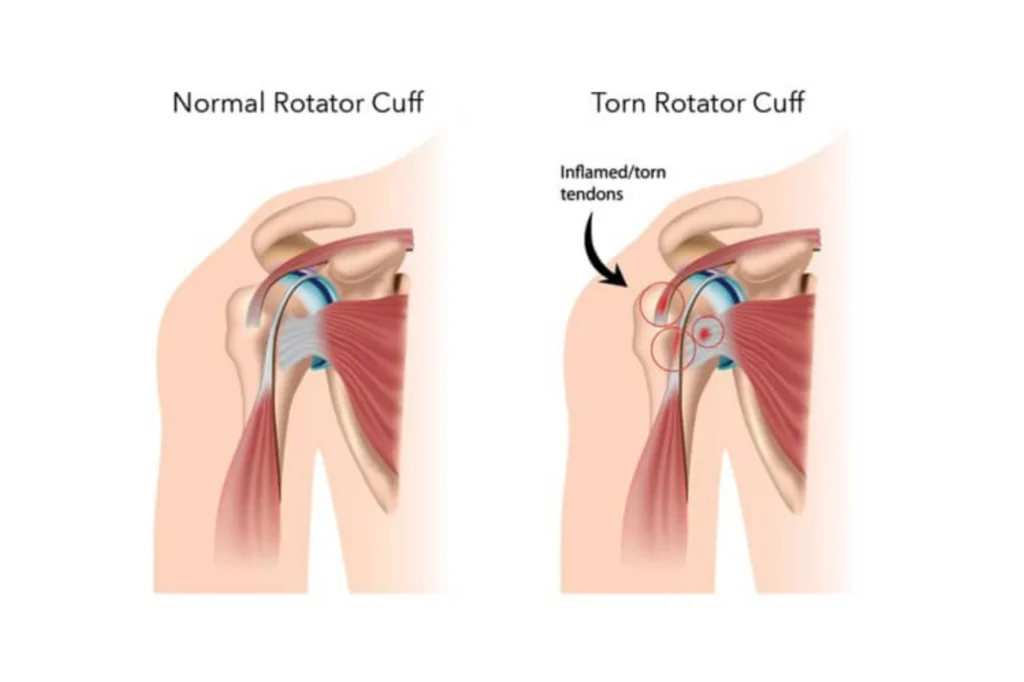
Treatment depends on the size and location of the tear, the patient’s age and activity level, and how the injury affects daily function. Physical therapy may help with partial tears. Larger or complete tears, particularly in active individuals, may benefit from surgical repair.
Labral Tears
The labrum is a ring of fibrous cartilage that lines the rim of the glenoid socket. It helps deepen the socket and serves as an attachment point for ligaments and the biceps tendon. A fall can damage the labrum in several ways, and the location of the tear often determines the symptoms and treatment approach.
A SLAP tear (Superior Labrum Anterior to Posterior) affects the top of the labrum where the biceps tendon attaches. A Bankart lesion involves the lower front portion of the labrum. Patients with labral tears may experience a deep ache in the shoulder, popping or catching sensations, and a feeling of looseness or instability in the joint.
Treatment may range from rest and physical therapy for minor tears to arthroscopic surgery for tears that cause persistent symptoms or recurrent instability.
AC Joint Injuries
The acromioclavicular (AC) joint sits at the top of the shoulder where the collarbone meets the acromion, a bony projection of the shoulder blade. A direct fall onto the top or side of the shoulder can sprain or completely disrupt the ligaments that hold this joint together. This type of injury is sometimes called a “shoulder separation.”
Mild AC joint sprains may cause localized pain and tenderness at the top of the shoulder. More severe injuries can produce a noticeable bump where the clavicle has shifted upward. Most mild to moderate AC joint injuries respond well to conservative treatment, including rest, ice, and gradual rehabilitation. Severe separations may sometimes require surgical intervention.
Signs You Should Seek Medical Evaluation
After a fall, it can be difficult to know whether your shoulder pain represents a minor bruise or something more serious. Certain signs may suggest that a more thorough evaluation is warranted. Consider scheduling an appointment with an experienced shoulder specialist if you experience any of the following:
- Severe pain that does not improve
- Visible deformity or swelling around the shoulder
- Inability to lift or rotate your arm
- Numbness or tingling in your arm or hand
- A popping or grinding sensation during shoulder movement
- A feeling that the shoulder is loose, unstable, or might slip out of place
Even injuries that seem mild initially can sometimes involve damage that becomes more apparent over time. Swelling may mask the full extent of the problem, and some tears or fractures only reveal their true impact once movement is attempted.
How Shoulder Injuries After a Fall Are Diagnosed
Diagnosing shoulder injuries after a fall typically begins with a thorough conversation about how the fall occurred. Details like the direction of impact, the position of your arm, and the symptoms you experienced immediately afterward give your doctor important clues about which structures may be involved.
A physical examination follows. Your doctor may assess swelling, tenderness, range of motion, strength, and joint stability. Specific tests can help isolate problems with the rotator cuff, labrum, or ligaments. Imaging studies may also be ordered. X-rays can reveal fractures, dislocations, and changes in bone alignment. An MRI may be recommended when soft tissue injuries are suspected, while a CT scan can provide more precise detail about complex fracture patterns when needed.
Treatment Options
Treatment for shoulder injuries after a fall is not one-size-fits-all. The right approach depends on the type and severity of the injury, the patient’s age and activity level, overall health, and individual goals for recovery.
Non-surgical Treatment
Non-surgical treatment typically involves a structured plan that evolves as healing progresses. The initial phase generally focuses on pain control and protection. A sling may immobilize the shoulder while ice, rest, and anti-inflammatory medications help manage pain and swelling. As symptoms improve, physical therapy may become a component of recovery, with exercises designed to restore range of motion, rebuild strength, and improve shoulder coordination.
Surgical Treatment
Surgery may be recommended when the injury is unlikely to heal adequately on its own or when conservative treatment has not produced satisfactory improvement.
Arthroscopic surgery uses small incisions and a camera to repair structures like the rotator cuff or labrum from inside the joint. This minimally invasive approach may result in less tissue disruption compared to open surgery. Open techniques may be necessary for more complex fractures or situations where the anatomy requires more extensive reconstruction.
In cases of severe fractures or advanced joint damage, shoulder replacement surgery may be considered. A total shoulder replacement or reverse shoulder replacement may be appropriate depending on the condition of the rotator cuff and other factors.
The decision to pursue surgery is highly individualized. It involves a conversation between patient and surgeon about risks, benefits, expected outcomes, and alternatives.
Summary
The shoulder is susceptible to damage during a sudden impact such as a fall, and the variety of structures involved means accurate diagnosis is important for effective treatment. Whether your injury involves a fracture, dislocation, rotator cuff tear, labral tear, or AC joint sprain, understanding the problem is usually the first step toward recovery. Many shoulder injuries respond well to non-surgical approaches like rest, physical therapy, and rehabilitation. Others may benefit from surgical intervention. The key is working with a specialist who can help you understand your options and develop a treatment plan aligned with your goals.
Frequently Asked Questions
How do I know if my shoulder injury from a fall is serious?
Severe or worsening pain, visible deformity, inability to move the arm, numbness or tingling, and a feeling of shoulder instability are all reasons to consider seeking medical evaluation.
How long does it take to recover from a shoulder injury after a fall?
Recovery timelines vary widely. A mild sprain might improve within a few weeks. A nondisplaced fracture may require six to eight weeks before rehabilitation fully progresses. Surgical repairs can involve three to six months or more before patients return to full activity. Your timeline depends on the injury type, treatment approach, overall health, and how your body responds to rehabilitation.
What is the difference between a shoulder dislocation and a shoulder separation?
These terms describe two different injuries. A dislocation occurs when the ball of the upper arm bone slips out of the glenoid socket. A separation involves damage to the ligaments of the AC joint at the top of the shoulder. Both can result from a fall, but they affect different structures and may require different treatment approaches.